
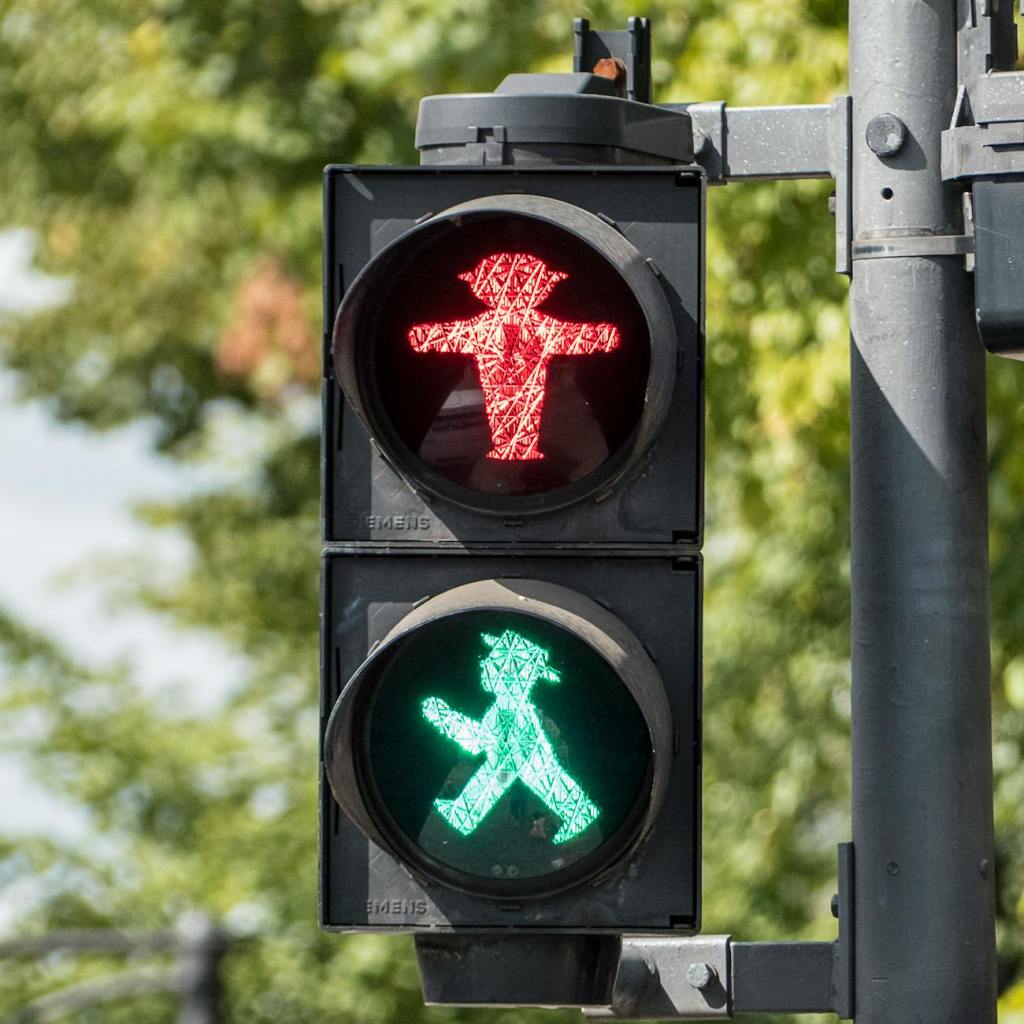
In the book “Mindfulness on the run” (2016), the author Dr Chantal Hofstee notes that the way our thoughts and emotions interact is complex. And yet, the ‘bottom line’ of all the discussions about layers of the conscious and sub-conscious is simple: “your brain [either] feels safe or unsafe” (page 13).
She calls the safe brain state ‘green’ and the unsafe brain state ‘red’.
[I instantly had the image of traffic lights in my mind: green means you’re safe to go, red means you’re not.]
All the thoughts, emotions and actions that you experience flow forth from your red or green brain state. Furthermore, these polar opposite brains are actually on a spectrum with red at one end and green at the other, and we regularly move up and down between the two states.
My copy of the book has Dr Hofstee (I assume it’s her) running in high heels across an aqua-ombre background, but this alternate cover helps explain the colored brain spectrum graphically:
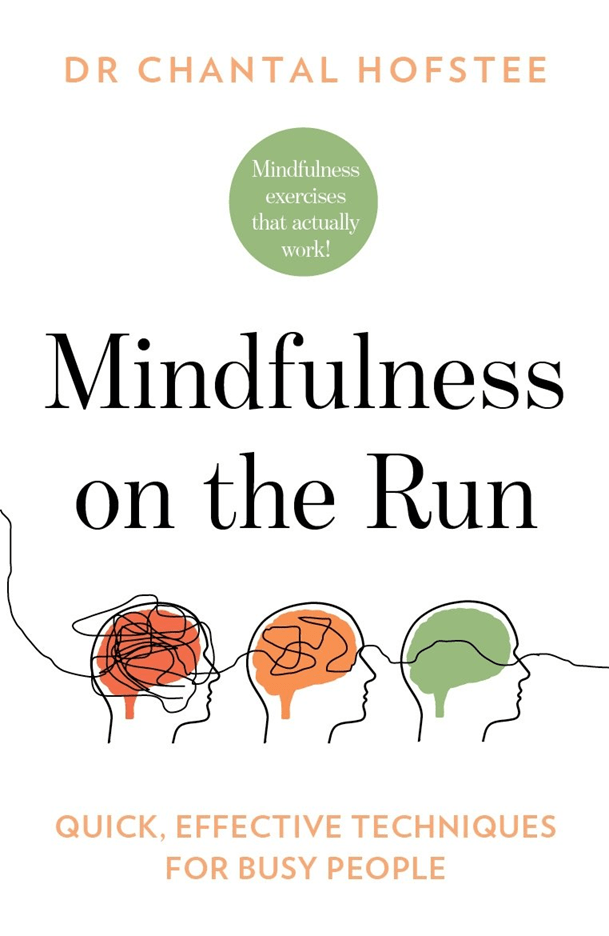
[Image source: google]
*
Ok, so what do these colored brains look like in more detail?
The red brain
Dr Hofstee says that a red brain is characterized by a state of stress (p14>). Similar to a fire alarm, it activates a fight-or-flight response (which is very useful in an emergency). But this brain state can be triggered even when there is no catastrophe to respond to – simply perceiving a threat is enough to trigger the red-response.
Physical effects of being in a red brain state include shallow breathing, tunnel vision, increased heart rate and blood pressure, sluggish digestion, tense muscles and a suppressed immune system.
Psychological effects include black and white thinking, and being disconnected and unkind to others. This can lead to prioritizing wrongly, bad decision making or miscommunication.
This brain state doesn’t need to be eliminated – but – it does need to be reserved for emergencies only, or else our brain and body become overwhelmed, burnt-out, anxious, depressed, and if held onto for too long, it can potentially lead to heart failure (16).
The green brain
This is a state in which a person is “calm and present” (16). The stress hormones (cortisol and adrenaline) are turned way down, and the happy hormone (oxytocin) is being released.
The physical effects are the opposite to those above. We breathe deeper, our muscles are relaxed, we have clear and wide vision, reduced blood pressure and so on. We think non-judgmentally and feel in control. We’re kind, compassionate and connected to others. And we can see the big picture as we solve problems creatively.
Being in the green state is essential for a healthy, balanced life.
But there is also some middle ground between these two extremes [just as I have previously identified in a similar revelation over a year ago: “Living in the grey (or orangey) zone of life“]:
The orange brain
This is the middle-state, which she refers to it as the “go-go-go state”. It is where you think about goals and set about achieving them. It’s not as relaxed as the green brain and doesn’t share its benefits to wellbeing, but nor does it have the negative health symptoms of the red brain. It’s a zone that moves between the two extremes, and because it is goal oriented, you can move to green when you feel like you have been successful, or slide into red if you don’t feel as if you have achieved what you set out to do (18).
*
Which brain state we are in depends on context. But not situational-threat types of context. It has more to do with our thoughts and feelings [creating a sort of chicken-and-egg conundrum]. A word like “money”, for example (my example not hers) can send your brain into the red or green state depending on what comes up in association with that word, be it a sense of nervous-scarcity or happy-abundancy.
And vice-versa; our brain states can color what we see around us.
She gives an example of getting ready and going to work in the morning. If you’re in a red mood then you will feel rushed and stressed, overlook and lose things, which makes things more stressful. And then, when you hit traffic, you will be agitated and angry with other drivers which might make the trip itself more dangerous and irritating.
An orange brain is still alert to the time and wants you to stay on track. You can multitask and tell yourself that you’ll do the fun things later, but first; work.
A green brain lets you enjoy the taste of breakfast, you’re relaxed and self-confident, so getting dressed for work won’t require you to change outfits three times, and when you find yourself in traffic, you’ll use the delay to listen to music and not let it ruin your mood.
So – how do you get to spend more time in a green-brain mood?
She explains it in one word: MINDFULNESS
Dr Hofstee defines mindfulness as “paying attention with kindness.”
And she notes that there are two parts to mindfulness: attention (be in the present, because that is all you can influence) and attitude (being negative or judgmental sends a signal to your brain something is not right) (28-30).
One way to tell where your brain is at, and whether you’re being judgemental and uptight or mindful, is to ponder whether you are reacting or responding to a situation.
Red brain = reactive
Green brain = responsive
Waking up to find your back is sore – do you react by complaining about the pain and how unfair life is, or notice the signal that your body is sending you for what it is and respond by wondering what you can do to improve the situation?
Mindfulness, Dr Hofstee suggests is a form of “brain hygiene” (35) – just as you brush your teeth to keep them strong, practicing mindfulness builds and maintains green-brain pathways.
The exercises she recommends (including mindful breathing and eating), are all very similar to those mentioned throughout The Mindful Migraine Blog – tap the “Mindfulness” tab to read more about what mindfulness entails or click this “Easy” tab for plenty of beginner-activities to try.
Dr Hofstee includes some examples of the Cognitive Behavior Therapy model of thoughts > feelings > behavior > outcomes:
Red brain: “today is going to be dreadful” > you feel agitated and stressed > you interpret events negatively > you become withdrawn and cranky > people avoid you and you feel unsupported, you make mistakes > it becomes a dreadful day
Orange brain: “today will be ok” > you feel nervous > you interpret events neutrally > you are focused and able to connect > you perform well and feel connected > it becomes an ok / good day
Green brain: “today is going to be great!” > you feel confident and positive > you interpret things positively > you are open, receptive and chatty > people support you and you perform well > it becomes a great day
It’s fairly funny to me that I intuitively hit on this green-brain thinking about 18 months ago in my “Don’t hit the pole!” post where I whisper-sang-recorded a little song I made up with the lyrics “today’s going to be a good day I can tell, I can tell!”:
The book covers a lot more information, with ways to engage in mindful communication, and improve your thoughts (whilst understanding how they might be tied to core beliefs) – way too much to summarize here. But I think the most important take away for me is imagining my brain in color.
The author ends the book by retelling the Cherokee tale (paraphrased here): there are two wolves battling inside us all, one good, one evil… the one that wins is the one you feed.
Look after your green brain people – stay mindful, keep going, and keep growing, and take care taking care,
Linda x
*
PS – Dr Hofstee has a YouTube channel here: Renew Your Mind Limited & a video similar to the content above if you want to explore this idea further: 3 Brain States
PPS – I don’t mean to be contrary and undo all the good work I did above, but for some ridiculous reason, as I was reading the book, I had a message niggling me from my infancy… it’s not really helpful in this situation (because it leans into a red-brain-state-thinking), but I’ll share it anyway – Kermit the Frog singing “it’s not easy being green” as an acknowledgment that we all feel blue… green… or red… somedays:
[source: Muppets – Kermit – It’s not easy being green (original)]


 The Mindful Migraine
Leave a comment