
I have written elsewhere on this blog that one of the aims for my holistic approach to healing has been to reduce triggers and increase my resilience to those triggers.
Reducing triggers is something I have done both intuitively and deliberately for years wherever possible. I know glare is a problem, so I try to wear sunglasses and a hat (although some days they can give me headaches). Similarly, dehydration and exhaustion are big triggers, so I do my best to drink water throughout the day and stick to a pretty tight sleep routine. I’ve always been suspicious that alcohol has been a trigger, so to be on the safe side, I just avoid it completely. Fluctuating barometric pressure in the atmosphere, on the other hand, is something I can’t do a lot about unless I’m prepared to stay inside all day every day, which is a pretty depressing idea.
Increasing my tolerance to triggers, therefore, is the other half of the equation. This means improving my emotional and physical resilience by doing activities such as sitting straight, relaxing my facial muscles, breathing deeply, meditating daily and attending pain counselling.
One way to imagine the relationship between triggers, tolerance and migraines, it is to hold your two hands flat and close together. (Imagine the two arrows in the picture below were your hands). When your triggers are low and your tolerance high, then the two hands are close together, you’ve created a healthy ‘baseline’ if you like. More importantly, there’s no room for migraine to sneak in.
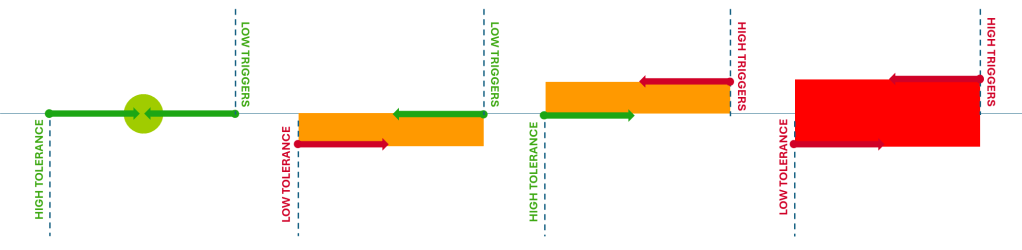
If your tolerance drops, however (you’re stressed or anxious or tired), you can imagine one hand slipping down. There’s now a gap that puts you at risk of getting a migraine. Similarly, if your tolerance stays high but your triggers increase (you skip dinner to go to a late-night movie with strobing lights in it), you can imagine your other hand rising. Again, there’s a gap that migraine can exploit. If both happen at the same time, and your tolerance is low and your triggers are high, now your hands are a long way apart. The gap is wide, and you’re at a much greater risk of getting a migraine.
Again, the trick is to try keep reducing your triggers, but also trying to have a life – which means improving your resistance, keeping your tolerance high. That’s where all the links in this blog come in handy. It takes practice, but with time, you can slowly improve your tolerance to migraine triggers through activities including being mindful of your posture, breathing patterns and the tension you hold in your body.
Remember, it’s your brain, your pain, your journey, so take your time to figure out what works best for you, and liaise with your health care professionals along the way.


 The Mindful Migraine
Leave a comment