
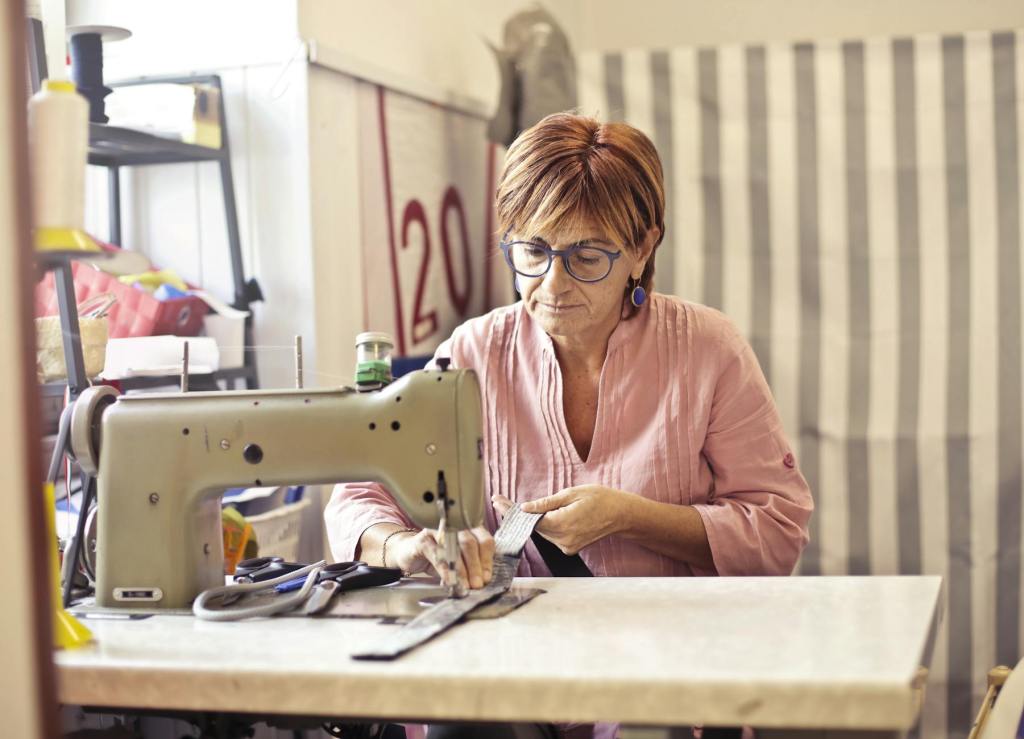
When I was a child in the 1970s, I remember my paternal grandmother always being busy. She was either baking cakes, digging in her veggie patch, cleaning the house – or mending… something… anything… everything.
More recently, I’ve noticed that we live in a much more throw-away society. Things are purchased with some sort of inherent understanding that they are not designed to last, and will in fact, be thrown away at some point. Even expensive items (such as electronic gadgets) are manufactured in such a way that if one part fails (such as the battery) the whole item fails.
Gone are the days when you could pop the bonnet of your car and use an old pair of pantyhose to create a fanbelt to fix the motor of your bright orange Volkswagen van (as my father used to do) so that your holiday journey could continue.
When was the last time that you unscrewed the back panel of a TV or radio and had a red hot go at fixing it yourself? How many people even own screwdrivers anymore??
If your clothes spring a leak as it were, do you have a needle and thread somewhere so that you can close the hole and carry on carrying on? Or do you place the garment onto the bottom shelf below the laundry sink and promise yourself you’ll use it as a cleaning rag sometime in the future when your sponges and tea towels eventually run out?
Mending it seems, is out of fashion.
Or – perhaps more truthfully – mending is trying to make a resurgence at being fashionable, but best intentions are often hampered by reality.
I’ve written about stashing the cardboard inner-tubes of wrapping paper in my one-woman bid to save the environment… and one day I might be brave enough to share a photo of the ABSURD quantity of glass coffee-jars I have on the lowest shelf of the pantry in case of a Tupperware-ending-apocalypse… but am I mender?
Yes and no.
I do know how to darn a sock, and much to my daughters’ embarrassment, I have been known to wear clothes with self-sewn-sutures. I am also pretty handy at using superglue to repair angel wings and coffee cups or picture frames that are no longer framing.
If, on the other hand, the faulty item has wires in it… I’m out. Either my hubby has to come to the rescue, or we weigh up how much a new version of the item will cost versus how much time and effort and money we’ll have to expend to get it fixed.
I feel sick to my stomach when something finally reaches it’s (re)use by date and has to go in the bin. When a daughter’s phone got drenched in a sudden downpour (whilst diligently tucked into the top pocket of her school backpack) I felt faint at the waste of it all.
When I drive past all the furniture that is put on the curb in the twice-yearly council clean-up, I feel sad for the universe that so many good items are deemed unworthy. Is there no charity these chairs can be donated to? No lick of paint that could refashion them into something fun for the back yard to help them limp along in employment a little longer?
Once, when my eldest daughter was about 6 years old, my father (the fanbelt-fixer) told her “there’s nothing free in life my dear” to which she scowled and replied, “that’s not true Grandad – there’s love and all the things you can find on the side of the street!”
In that sense, I am a champion mender. A large proportion of household furniture over my lifetime has come from repurposed ‘roadkill’ items and those licks of paint I was referring to.
But what about our health?
What does it mean to be “on the mend” as people say?
And who is doing the mending? Ourselves, I suppose. But how? More medication? More mindfulness? More movement and exercise, and better breathing, more quality sleep, less stress, hydration, detoxifying our environment and watching what we eat… All of the above?
At the risk of sounding uncharacteristically negative – is it possible that healthcare is going the same way as mending in general? Are we all going to end up being treated as if we were disposable units that work until we don’t? Is it possible that the system is shifting in a way that will leave the more fragile of us left behind to fend for ourselves, such that only the most robust will move forward into the future? Who will help replace our batteries, so to speak, if there are less and less people trained to help or be compassionate enough to care?
It sounds a bit grim… and a little bit like reality.
Perhaps.
But that idea of being the change you wish to see in the world remains as true as ever. If you want to be on the mend – do it – save yourself. Embrace self-help. Embrace longevity through repurposing yourself and your attitude. Find a way to metaphorically replace your fanbelt with a pair of pantyhose!
Keep building up the strength and resilience in those nimble little fingers and curious large minds of yours.
Keep mending yourself… because you can.
Good luck and take care taking care, Linda xx


 The Mindful Migraine
Leave a reply to PACIFIC NORTHWEST SCRIBBLER Cancel reply