
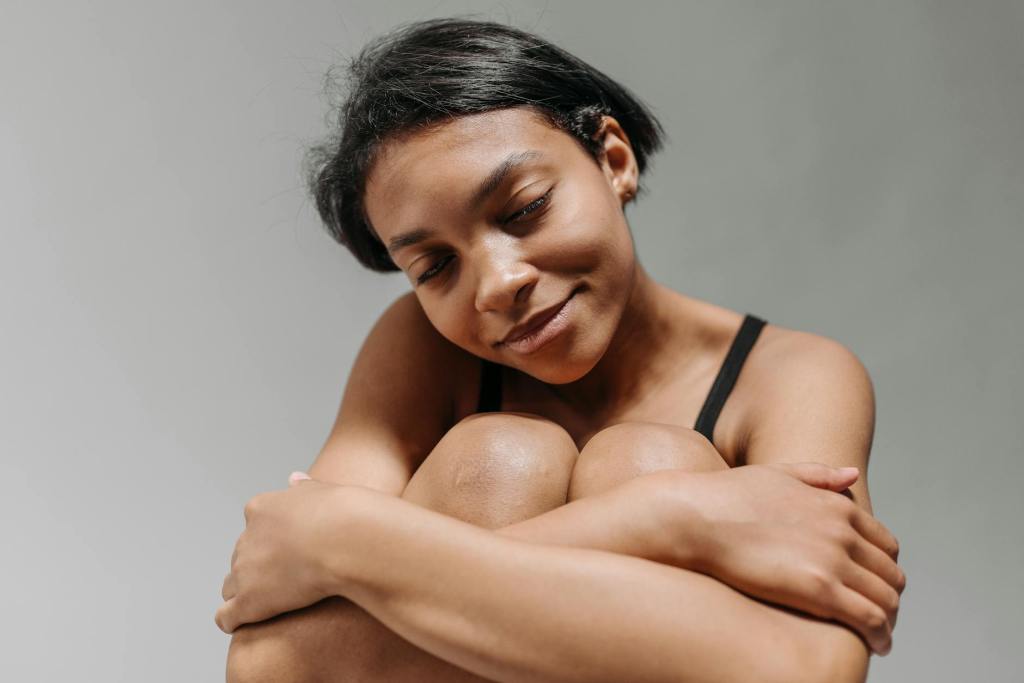
Now that I had graduated from my PhD studies and can call myself Dr Linda, I have no need to read technical books anymore… and yet… some habits are hard to break. As such, I’m still reading a lot of non-fiction works, but now their topic tends to be all things mindful.
One such book I recently borrowed from the local library was psychologist Noa Belling’s “The Mindful Body” (2018). The book opens with a chapter titled “Greeting your body” and reminds us that in the same way we greet new acquaintances with a handshake, we can also befriend our body anew through (platonic) touch. She called this type of touch “self-holding”.
Ms Belling notes that we often do it intuitively (such as when we place our hand on a sore spot and rub). She then gives you 6 options to try (pages 9-11) and recommends you breathe naturally as you do them. Take note of which ones resonate, and which ones not so much.
She doesn’t name the postures, but I did to help me remember them (and I’ve added explanatory pictures below) – you can ditch the names or call them whatever you like if it helps improve your enthusiasm to try:
- HEAD-HUG: Place one hand on the base of your skull (where it meets your neck) and the other on your forehead or top of your head and breathe awhile = reduces stress and mental agitation.
- SHOULDER-SQUEEZE: Place one hand on the opposite trapezius muscle (where your neck meets your shoulder) and squeeze – hold for a few breaths, then swap sides, and end by placing both hands on the back of your neck and trapezius muscles and give it all a good rub = reduces stress and slows breathing.
- A NICE CUDDLE: Embrace yourself and rub or squeeze your upper arms (you can also slip your hands under your armpits and just hold still) = give yourself some self-love.
- GRATITUDE POSE: Place one or both hands over your heart = self-nurtures and improves positivity.
- RELAX: Rub your lower back (the other hand goes to your knee or just nearby inside your leg) = grounds and energizes you.
- NAMASTE: Hold your hands together in front of your heart or face in prayer pose = centers you [whilst simultaneously connecting you to the wider universe in my opinion].
Here’s a montage of images I asked AI to make for me (the sketches in the book were not showing up well when I tried to photograph them) only the first one is a bit off (your hand should be further towards the front of your face) – I quite like their evocative instruction:
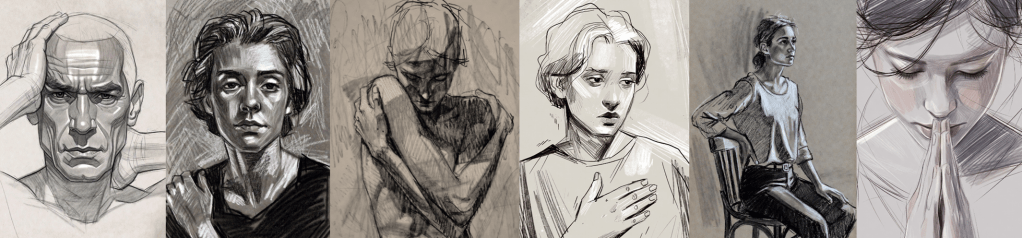
[Image source: me and AI]
*
OK, so other than sounding like a nice thing to do for yourself, what are the advantages of giving yourself a cuddle?
Within us, we have two nervous systems: the sympathetic and the parasympathetic nervous system – and hugging helps both.
The sympathetic [fight-or-flight] nervous system is characterized by energy, confidence and alertness. It’s good for escaping emergencies, but if gets out of balance, it can lead to hyperactivity, anxiety or panic (p12). The parasympathetic [rest-and-digest] nervous system is characterized by relaxation, connection and introspection, which is great for our wellness, but if there is too much, we can feel over-tired, numb or helpless (12).
“Touch is a simple and accessible method for supporting yourself to let go of sympathetic or parasympathetic nervous-system extremes and to open to a more balanced, wholesome and grounded state of the nervous system.” (12)
Another section I really liked was soon after, when Ms Belling writes about body language and how the way we hold ourselves in general can change how we feel and then how we think. I’ve written about the importance of power poses and why it is risky to have a hunchy-scrunchy body when you have chronic pain (read more here). What she did though, was put an interesting spin on the poses, suggesting the ones we favor can indicate the levels of different hormones and neurotransmitters in our body and brain. I’m not sure how much to believe it, but it was an interesting thing to try, so I thought you might like to try it too.
I’ll use 4 AI images to show you the 4 poses and what they aim to do – try holding each for 1-2 minutes and see how you feel. Then place the postures in order of which ones felt most to least comfortable to do, and then I’ll tell you which hormones you supposedly have most or least of in your system. And don’t try to second-guess the outcome – just have an honest go.
[Disclaimer – I am not a doctor – please do NOT take medical advice from this blog and be sure to speak to a trained professional when making decisions about your welfare in terms of physiotherapy, hormones, or otherwise.]
The postures are:
(1) Boosting love and kindness – place your hand on your heart [it’s the ‘gratitude’ pose from above]
(2) Boosting confidence – stand with your legs apart and hands on hips [it’s a Superman / Wonder Woman style stance]
(3) Boosting zest for life – stand up straight and raise your hands up and outwards, extended to the sky [it’s the celebratory stance when a marathon runner crosses the line]
(4) Boosting centered thoughtfulness – hold your hands in prayer pose in front of you and drop your head [it’s the ‘Namaste’ pose from above]
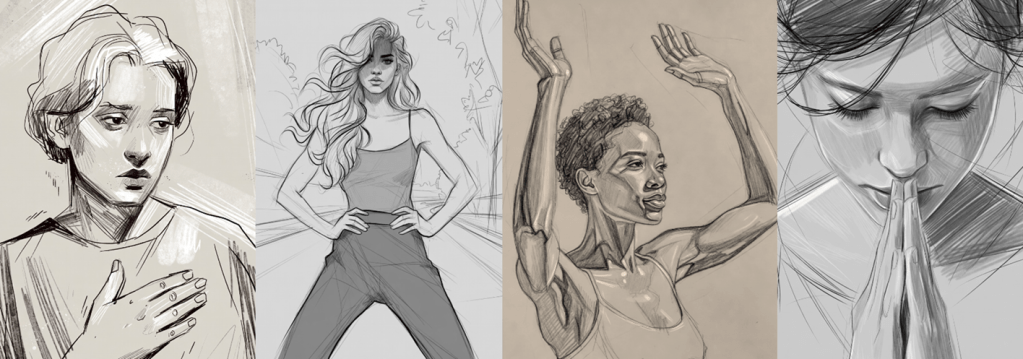
[Image source: me and AI]
OK, so now that you have tried the postures out – what felt good to you? What felt uncomfortable? Write it down. Don’t over think it, just have an intuitive guess about how ‘normal’ you felt in each stance.
[At the risk of breaching my own privacy, my order was not straight forward, but probably 4-1-2-3]
*
*
*
Now, I’ll tell you what Ms Belling says are the related hormones and personality traits that go with each preferred posture [note: I don’t know how much you should read into this activity, as I suspect several things might influence your choice including cultural differences, upbring, physical limitations (I have a frozen shoulder for example that makes posture 3 hard to do)] – but anyway, here goes, here’s the hormones that are related to and released by the postures and your probable personality type – read them in order of your numbered response from above:
(1) estrogen = “negotiator” (empathetic, trusting, imaginative, reflective & philosophical)
(2) testosterone = “director” (analytical, competitive, independent, assertive & extrovert)
(3) dopamine = “explorer” (curious, energetic, irreverent, autonomous & adventurous)
(4) serotonin = “builder” (cautious, conscientious, dutiful, calm & introverted)
So, I had to do a quick search for what serotonin is (what I’m supposed to be high in as a “builder” (does architect count?))… as such, here’s a quick reminder of what the 4 hormones do based on a cursory web search.
[Disclaimer – reminder – please don’t use this blog post for medical advice.]
Estrogen is a big part of the female reproductive organs, but it is also involved in every human’s cognitive status, bone health, and the cardiovascular system. Testosterone is the main male reproductive hormone, but it too plays a role in bone and heart health. Dopamine is the hormone and neurotransmitter that plays a role in mood, movement, memory and motivation. Serotonin, meanwhile, is a hormone and neurotransmitter that influences everyone’s mood, sleep, appetite and digestion.
Anyway – this post is getting longer than I planned – so I’ll end by suggesting you do two things for yourself: the first is to do the power pose that you ranked 4th on your list of favorites – do it to give yourself the gift of what might be missing in your system [I’ve been walking around the house fist-pumping the air and I’ve gone from feeling ridiculous to a little more energetic].
Second, go back to those self-holding positions and keep practicing the ones that feel best for you [I’ve been surprised by how much I enjoy giving my skull a cuddle!]
Take care taking care, and know that I’m sending lots of digital hugs your way,
Linda xox
*
PS – speaking from personal experience, be careful what you type into your search engine if you go looking for more information… it turns out “self-hugging” gets you a very different set of feedback to the search for “elfs-hugging”… ha ha (true)!!
[Source: embedded gif from accidental search for “elfs hugging” which sent me gif options including “elf rabies” (yep): Will Ferrell Elf GIF]
PPS – In case you’re scared of encountering elves trying to hug rabid raccoons in a web search – here’s some other web pages I found for you, with different self-care postures you can try, as well as more feedback on why they work so well:
(2min): Grounding Activity for Kids and Adults #18: The Squeeze Hug
Hugging Self: Benefits, How to Do It, and More
The 5 Step Self-holding Exercise – The Art of Healing Trauma


 The Mindful Migraine
Leave a reply to Layla Todd Cancel reply