
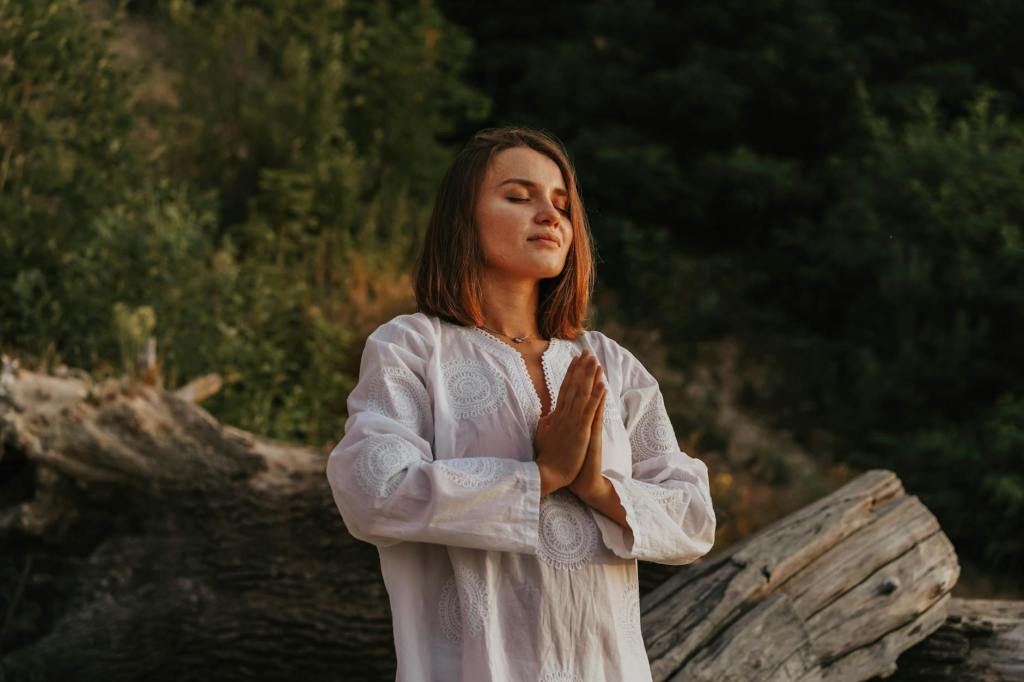
In my quest to find mindfulness practices that resonate with my level of fitness, personality and available time, I’m always on the lookout for different types of meditation practices.
Today I want to talk about “Kundalini Meditation” – but know that it originated in ancient India thousands of years ago, so I can’t possibly do justice to its rich history, be sure to get it all right, OR give a comprehensive description of all the what’s and how’s… but I’ll do my best to summarize my findings (from books and online) and give you an overview in case you want to explore more for yourself.
Kundalini meditation is premised on the idea of a life-force that is inside us, an energy that is often described as a snake coiled up at the base of our spine. By awakening the energy within us, and moving it upwards through our chakra points, we can expand our consciousness and potentially experience a spiritual awakening.
Kundalini meditation practices usually combine several different techniques in one sitting:
+ body positioning – different meditations recommend different positions (including yoga poses); how you sit, cross your legs, or place your arms and hands are all influential.
+ Bandhas – body locks (such as ‘locking’ your diaphragm or neck into place).
+ Pranayama – breath control (involves a variety of techniques such as holding your breath, breathing through alternate nostrils, or using specific exercises such as ‘breath of fire’ where you breathe in through your nose, then breathe out through your nose is short, sharp bursts, powered by squeezing your navel towards your spine over and over).
+ Mundras – hand gestures (holding your thumb to your pointer-finger is probably the most known and is called “Gyan Mundra”, designed to generate wisdom and expansion).
+ Mantras – sacred sounds (for example, “OM” which represents the vibration of the universe (God and all time), or the words “SAT NAM” which means “truth is my identity” and is aimed at awakening the soul).
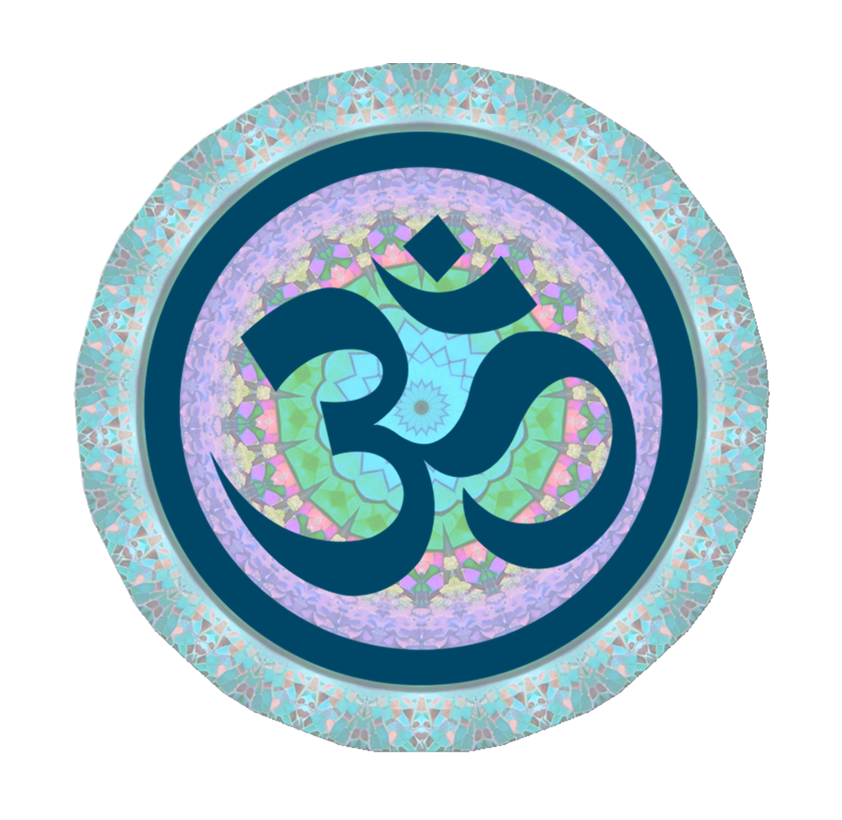
+ Yantras – visual symbols (such as illustrations of the body’s chakras or mantras; OM is a common symbol reproduced for meditative purposes – here’s OM on top of my healing mandala below):
One book that I borrowed from the library, by Kathryn McCusker, was very detailed, but also a little overwhelming. She recommended clearing a space to meditate for 20 minutes each day for 40 days. She also suggested eating ‘pure’ food, having a cold shower, and changing into loose clothes (‘pure’ white for her), before you practice. Then you select the meditation that most suits your intentions.
Even if you were to skip the diet overhaul, shower and wardrobe swap, each mediation itself was a little tricky to self-learn. The “Meditation for Healing” on page 136 for example, required you to sit in half-lotus, do a light neck-lock, relax your elbows at your side whilst extending your hands sideways (it looks a bit like the “huh?” emoji-pose), and your hands go flat with thumbs spread. You close your eyes, chant RA MA DA SA, SAY SO HUNG for 11 minutes from the heart and feel it resonate in your mouth. Then finish by sending a prayer to someone you wish to heal (it can include yourself) then shake your arms and sit in silence for a few minutes.
I think if you can find a class to go to that would be best.
That said, I did discover that the Brett Larkin Yoga channel on YouTube includes some Kundalini Meditation sessions. Here’s her (13 min) meditation which includes instructions on how to sit, hold your hands, chant, and do fire breath. It’s a great way to decide if you’re interested in knowing more:
[Video source: KUNDALINI YOGA THIRD EYE CHAKRA | Increase Prana Shakti with Music]
*
For me, it was an interesting variation on guided meditations that tend to encourage you to sit still and steady your mind. Kundalini meditation feels more active. But – I suspect it’s not really designed for occasional experimentation, and you need to do it consistently if you want to ‘awaken the snake’ as it were!
Take care taking care mindfully,
Linda x
*
PS – Disclaimer – mindful movement of this sort is not suitable for all people – please be sure to speak to your doctor before proceeding and consider working with a trained professional.
PPS – I have placed this mindfulness routine into the ‘Difficult‘ category of activities to try, as it is a multi-faceted practice, probably best performed in a classroom arrangement rather than home alone (click here for alternative ‘Easy‘ and ‘Moderate‘ mindfulness activities to try).
PPPS – Understanding that there are many variations of Kundalini Meditation, I’m happy to be corrected if I have made any serious errors in my summary above – let me know in the comments below!!


 The Mindful Migraine
Leave a reply to Stephanie Cancel reply