
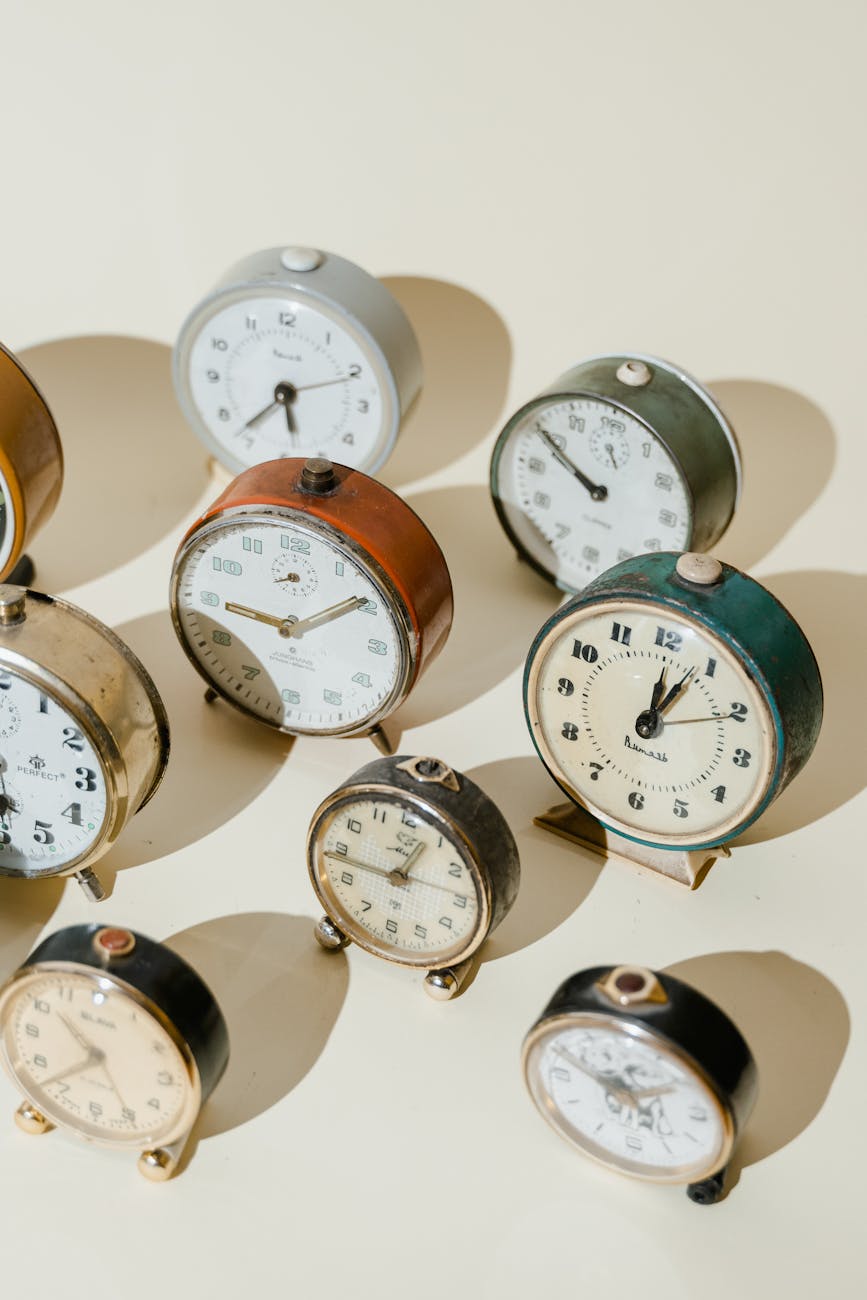
Last weekend, in Sydney-Australia, our clocks rolled back an hour. My youngest daughter was ecstatic to find out that when she came home from a party late at night on Saturday, she would score another hour of sleep. The other daughter forgot about the clock-change and got up as per her usual 6.30am schedule (even though it was a Sunday – bless her!), only to discover it was really 5.30am. I thought she might flip out when I came into the kitchen to tell her, but she was happy to have gained an extra hour of study that morning for her exam on Monday.
For me, the super-subtle shift in the clock can be a big problem.
The recent change has been OK – but I have been particularly careful to avoid triggering a migraine.
What’s the big deal you might ask?
Well, daylight-savings is like a teeny-tiny version of jetlag. Your stomach is saying “feed me” because it thinks it is noon and therefore lunchtime, but the clock is telling you to wait an hour. Bedtime is also thrown out: the wall-clock said it was 8.30pm on Sunday night, but my body-clock was saying “9.30 is when you start closing your eyes and heading into sleep.” So, as I tried to watch the TV, sure enough, my eyelids were getting heavy. I’ve written before (here) about how I call my migraine-pain-brain “Goldilocks” because she likes things to be not too hot/light/caffeinated and not too cold/dark/caffeine-free, but JUST RIGHT… this is similar – because – daylight savings is a “routine wrecker”.
The way I remember it, the last time I went through daylight savings 6 months ago, I got sick. The time difference was enough to tip my world off its axis and send me spiraling health wise for a couple of days. I remember at the time, I blamed it on daylight savings.
The funny (ah-ha not ha-ha) thing about having an invisible chronic illness, is that you start to second guess yourself a lot. In the same way that you feel “out of sync” with the world around you, you also wonder whether you’re the only one who is recognizing a link between some cause and effect situations.
It makes sense that if you catch a plane to the other side of the globe, there’s a chance that your body-clock will stumble and trip for a couple of days. But could a single hour really make you feel unwell?
I got googly and here’s what I found out:
MigraineDisorders.org opens their post about whether falling-backwards/springing-forward can give you a headache (especially migraines and cluster headaches) with: “The simple answer is yes.” They then go on to note: “there are several factors at play, and many of them are intertwined. Changes in circadian rhythm, sleep disruptions, hormones, changes in routine, stress, and a person’s susceptibility to headache all play a role.” Their advice on how to minimize the potential for a headache is to start adjusting your routine slowly, in advance.
According to LiveScience.com, an increase in cluster headaches is only one of the 5 “weird” effects of daylight savings – others include an apparent increase in car accidents, heart attacks and workplace injuries, as well as an increase in “cyberloafing” for the first Monday back at work… hmmm…
What was the MOST interesting thing I discovered, is that the trend potentially only occurs ONCE a year, not for both time-changes.
Reading through the notes of a recent German research paper (The Impact of Biseasonal Time Changes on Migraine (2025)) they conclude: “When switching from standard time to daylight savings time in the spring, the frequency of migraines increases significantly one week after the time change. In autumn, in comparison, there is an inverse trend with a reduction in migraine frequency. These data suggest that synchronization is disturbed when switching to daylight savings time. Conversely, synchronization normalizes in autumn. In view of the high prevalence of migraines, this can have extensive individual and social consequences.”
The percentages of the increase only appear to be around 5-6%, but still obvious enough to recognize as “significant”.
SO – it might NOT be a coincidence that I got sick during the last time-change in Spring (when I was “losing” an hour of sleep) versus feeling OK this time around in Autumn (when I got an extra hour of rest).
It’s always reassuring to find out that you’re a “statistical normie”!!!
I think many of you might have already “made the change” – apparently there’s some 70 countries around the world that use seasonal daylight-savings adjustments, and some of you do it at the start of March not April (which makes a bit more sense as it is the beginning of the new season)… but our approach seems to make sense in Australia, due to the way our daylight hours work out… perhaps it’s that whole down-under thing!
Anyway – here’s hoping that those of you who had to adjust your routines did so safely – and continue to do so every 6 months.
Remember to rest and have a wonderful upcoming weekend!
Take care taking care over there, Linda xx
PS – if contemporary scientific papers don’t persuade you that one half of daylight-savings is problematic, perhaps this assortment of memes might:
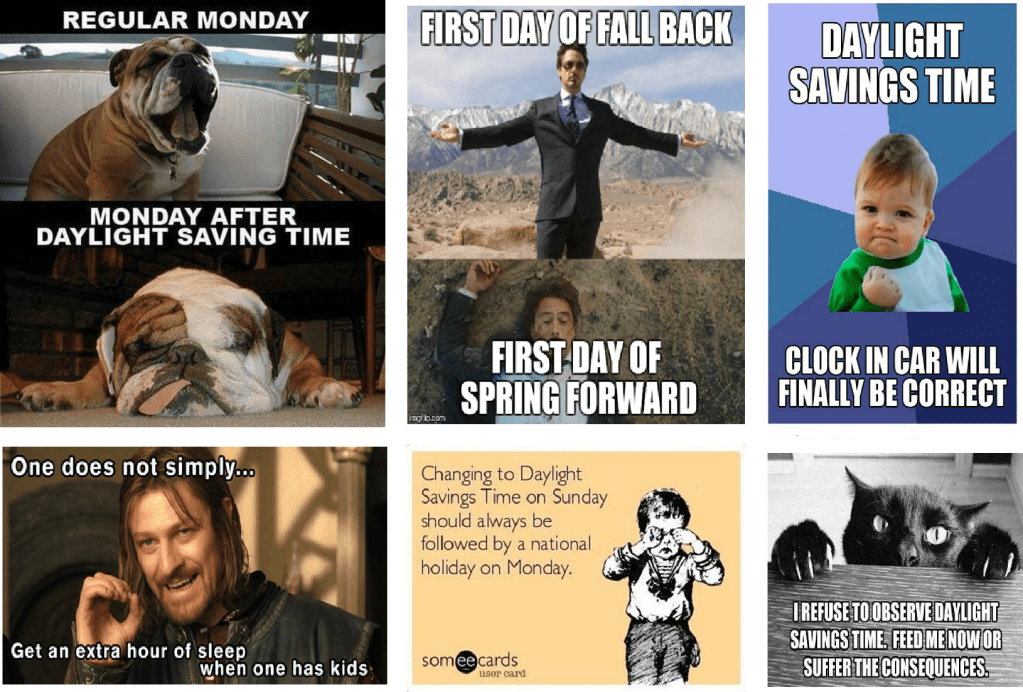
[Image source: googling!]


 The Mindful Migraine
Leave a reply to The Mindful Migraine Blog Cancel reply