

When I was 19 years old, I went backpacking through India and Nepal with the intention of making it to the Annapurna base camp (read more here about how I ALMOST made it). One of the gifts that I brought home from that journey was an increased awareness of how wonderful the world is, and the second gift, was an interest in yoga and meditation.
Yoga was not yet a big thing in Australia in the late 1980s / early 1990s, whereas meditating I could do on my own. For a while, I was a consistent meditator, throughout my 20s and early 30s.
Once, and only once, while I was in a deep meditation I had an out-of-body experience where I genuinely felt as if I had transcended my thinking-feeling self and became one with the universe.
It was very trippy, and quite wonderful, and whilst it probably should have turned me into a lifelong committed meditator… things got super-busy and my meditation and yoga practices both fell to the wayside.
When I came across the phrase ‘transcendental meditation’ more recently, I was excited to check it out again, and borrowed a couple of books from my local library in an ‘old fashioned’ attempt to learn more.
The first book I opened was “Strength in Stillness: The Power of Transcendental Meditation” (2018) by ‘meditation guru’ Bob Roth. The book calls this form of meditation “TM” (which made me think of ‘trade mark’ which is ironic because Mr Roth seems to have adopted the teachings of the Indian Yogi Maharishi Mahesh and then registered it under copyright). The book starts with a promise that TM will change your life and then… how to say this politely…? Provides nothing… nothing but a whole lot of smoke and mirrors but no answers, no guide, no nothin’ – unless – you move to the next stage which is to pay him to join one of his classes.
The basic premise of TM seems to be that you repeat a single mantra over and over in your mind – but that mantra can only be given to you by a professional teacher, and only they can explain how to use the mantra properly over the course of 4-7 lessons. The majority of the book was just a whole lot of celebratory endorsements (think Hugh Jackman, Katy Perry, Jerry Seinfeld, Ellen DeGeneres, Russell Brand). It read like a looooong infomercial where any meaningful guidance was ungenerously placed behind a very thick paywall.
[I raced over to Goodreads after writing this, because I felt a bit guilty – but it turns out plenty of other people reluctantly gave the book 1 star (because 0 was not an option) – and for the same reasons, writing comments like: huge waste of time / money, a sales-brochure filled with cringey celebrity shoutouts, what a rip-off and… barf… is this a cult? A Reddit feed had plenty of people who said TM was worth the investment, whilst others said it was a never-ending cash grab, and someone suggested you try the free 1GiantMind app instead.]
[I then popped over to Roth’s TM website (here) and, sigh, the ‘how to’ page says: “Only certified TM teachers teach the authentic TM technique that can enrich the entirety of your life.”]
[I’m not a fan of this sort of gatekeeping ‘secrets’ that could benefit others. It’s why everything on my RESOURCES page is free. Whilst I understand the desire to be compensated for your time / skill / effort, charging for every scrap of advice seems to go against everything I imagined mindfulness ought to be… as I’ve written about before: “It’s about the healing – not the healer” / “mindfulness and its discontents” / “Hiss… Growl… Grumble… Sigh…“]
A more generous book is Jacqui Lewis’ “The 14 day Mind Cleanse” (her website is here). Adopting a daily meditation practice is her first step in giving your mind a spring clean (undertaking a digital detox, establishing calm rituals and ‘banning busy’ are others). She notes there are three main types of mediation (page42):
+ contemplative techniques: “where your mind is taken on a journey” or you contemplate a single thing such as gratitude (she gives examples such as guided meditations on YouTube or at the end of a Yoga class)
+ concentration techniques: “where you focus your mind” by repeated chants, zero-in on your breathing or different parts of your body (Vipassana and Zazen are her examples)
+ transcending techniques: “where you work gently with a mantra to allow the mind to naturally and effortlessly transcend thought” (she includes transcendental, Vedic and integrated meditation as forms of this)
Ms Lewis’ preference is for the last form of meditation because it can be done anywhere without silence, solitude or a yoga position. She also offers a customized mantra-for-you service that you use twice a day for 20mins each session, and she too touts it as a “total game-changer” but rather than shut you down at that pay-to-play stage, she suggests that beginners can focus on any single word and still benefit, rest and relax.
She recommends 10 minutes a day (set a timer if you’re a type A personality, she says, otherwise go with the flow). She suggests you use the mantra-word “one” (as in the first number or all numbers distilled / you are one mind+body united / you are one with the universe) and repeat it softly over and over in your mind. If thoughts arise (and they will) just drift back to the mantra-word, and allow it to become your anchor point around which your thoughts will drift.
[I tried this mantra, and a strange thing happened – I found it best if I placed the word in the middle of my mind’s eye (like a gently glowing neon sign on a dark background). Somewhere along the way the word ‘one’ turned into the number ‘1’ which later morphed into the Roman Numeral for 1 which is ‘I’ – as in me, myself and I… which is potentially the opposite of what transcending self is supposed to be about, but in other ways, it was a clear signal that our subconscious minds are happy to take the reins when the busy-brain is asked to shhhhh for a while.]
I googled videos to try, and found a good (10min) explanation of TM (but again, it says you’ll need to speak to a teacher to receive your customized mantra):
[Video source: Transcendental meditation Introduction and Guidance]
I also found a channel on YouTube that includes potentially not TM’d TM exercises to try. They each appear to be about 30 minutes long (I aim to try a couple this weekend): Raphael Reiter – YouTube
While writing this post, I remembered the phrase that I used to repeat over and over 30 years ago: “om mani padme hum”. I looked it up over on Wikipedia and “Oṃ maṇi padme hūm̐” is Sanskrit for “praise to the jewel in the lotus” and “the mantra is seen as the condensed form of all Buddhist teachings”. The six syllables: om ma ni pad me hum, each refer to a different teaching; generosity, ethics, patience, diligence, renunciation, and wisdom.
You’ve probably seen the “om” symbol if you’ve ever been to a yoga class – if not, I’ve placed it into my own healing mandala below to show you what it looks like:
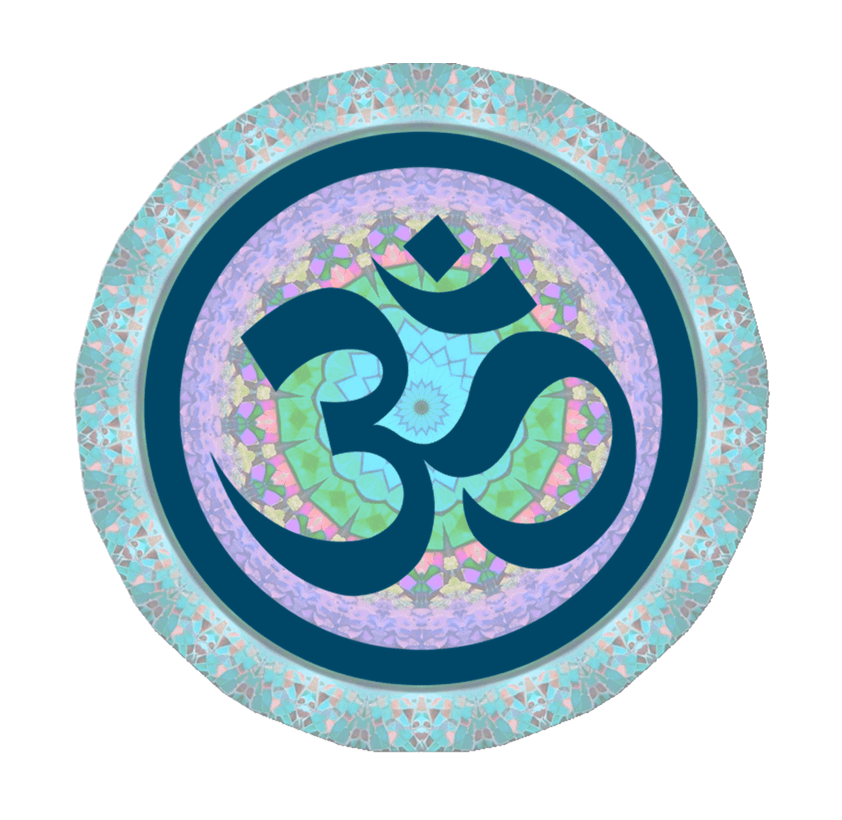
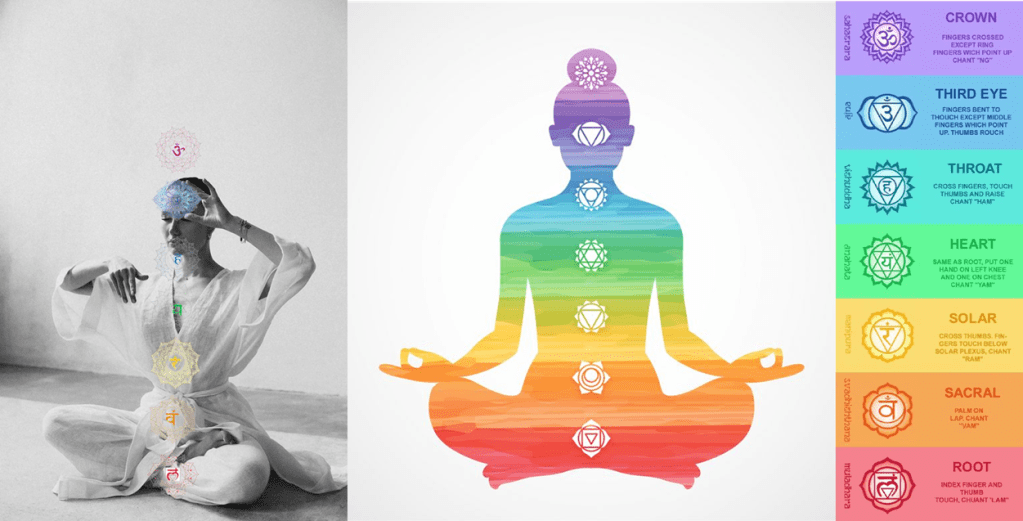
SO – I think that meditating with a mantra is a nice idea, but rather than paying a master to give it to you (but don’t let me stop you if you’re keen), I think you can try it out for yourself, either by using the word “one” or “OM” or else, follow me in my most recent experiment; pick one or more of the ‘seed mantras’ associated with your chakras (working from your body’s bottom (literally) to your head’s ‘crown’) and say it silently in your head over and over, or hum it out loud (because humming sends a beautiful vibration through your body – read more on my blog here):
- Root Chakra – LAM
- Sacral Chakra – VAM
- Solar Plexus Chakra – RAM
- Heart Chakra – YAM
- Throat Chakra – HAM
- Third Eye Chakra – OM
- Crown Chakra – Silence (OM)
Here’s an image montage to help you understand where each chakra is (and there’s more info on my blog here):
[Image sources: Pin on Arte inspirador / The 7 Chakra Colors and Their Meanings / energy symbole]
*
Waiting for the right advice is important – but sometimes (where the risks seem low) I’m a fan of “have a go and see what happens”.
Take care taking care,
Linda x
*
PS – I’ve marked this exercise under the ‘Moderate‘ tab of mindfulness activities to try, not because it’s particularly hard, but because you might have to do a little research yourself to supplement your training. (Here’s the links for the “Easy” and “Difficult” activities to try if you’re interested in dialing your self-help healing experience up or down.)
PPS – let me know if you’ve paid for the trademarked TM course and if it was a real game-changer – I’d love to hear feedback!!


 The Mindful Migraine
Leave a reply to John Cancel reply