
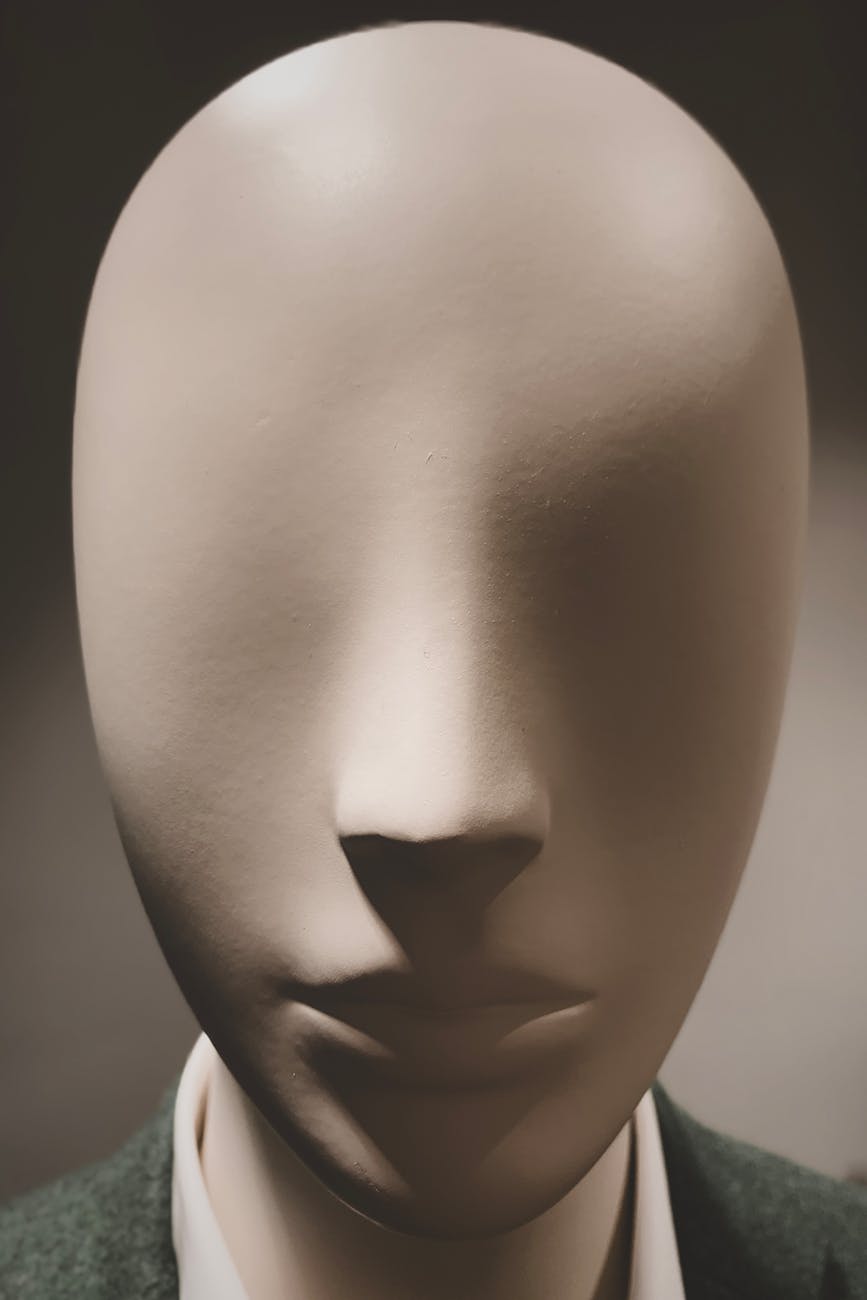
My news feed is currently filled with images of a giant Triumphal Arch proposed for the United States of America. As a result, my mind has been bouncing around about the human need to build monuments to ourselves.
In my PhD dissertation (I graduated late last year after PhD’ing with a migraine for years) – I included a chapter of research which related to Maya Lin’s design for the Vietnam Veteran’s Memorial (VVM) in Washington DC. I have always loved the dark, stark grimness of Lin’s ‘retaining wall’ which holds back the soil behind it whilst also storing for eternity the names of the poor unfortunates who lost their lives in war.
Lin’s unfolding blank slate of a monument was an inversion of so many other monuments in the Washington area, including The Lincoln Memorial ‘temple’ (1922), the Washington Monument obelisk (1884), the Tomb of the Unknown Soldier (1921) and Confederate Memorial (1914). The VVM was black where most memorials were white, it was recessed when so many others were elevated on large plinths for visual prominence, and it was abstractly simplistic when most memorials are coded with patriot flags, quotes and imagery.
But Lin’s design didn’t appear out of nowhere. It was part of a general shift away from positive affirmations of people and events. After the horrors of WWI (and II), the notion of venerating monuments changed. Historian Lewis Mumford’s ‘The Death of the Monument’ (1937), for example, noted that the memorial-motivation of the past made sense; “Men die; the building goes on” – however – he also felt that when humans “place their hopes of remembrance upon stone joined to stone”, they reveal themselves fixedly “oriented toward death” (1971, 263-4).
Mumford and others, turned towards life instead and it became a regular practice to create memorial hospitals, schools or parks – communal places of hope and joy that looked towards the future, rather than static stones that stared at a fixed past.
Recently, I came across another statue in a blog post that made me sit up straighter and immediately start to google my little heart out… ah-ha… I thought, this looks like an anti-monument…
[Image source: screenshot of blogpost noted below]
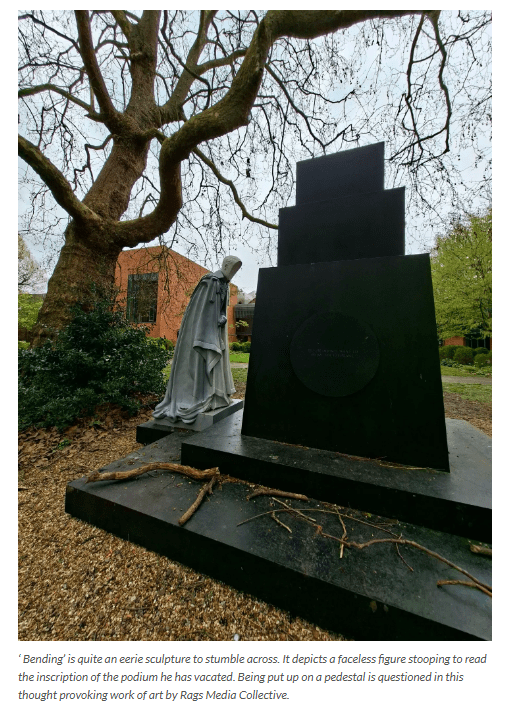
The fabulous blog post – A few hours in Manchester. 🐝 | sunshine and celandines – shows an image of a faceless man leaning in as if to read the words on a large pedestal. The author describes it this way:
‘Bending’ is quite an eerie sculpture to stumble across. It depicts a faceless figure stooping to read the inscription of the podium he has vacated. Being put up on a pedestal is questioned in this thought provoking work of art by Rags Media Collective.
Oh…! As someone who felt like they lost their sense of self to years of chronic migraine (I’m feeling a lot better now, but still quite brittle) I just had to know more about this human, fallen from their pedestal, with an empty skull and bent back…
I visited a site called Big Issue North (here) that explains the statue in more detail:
Based in New Delhi, Raqs Media Collective is a group of three artists […] Bending (2015) is a life-size sculpture […] a faceless figure has been removed from the plinth and made to kneel at the base. Dressed in a robe of the Order of the Star of India – the most senior order of chivalry associated with the British Empire – it is an image of power deposed […] Although the figure appears to be made of stone, it is actually fibreglass. The plinth, which at a distance looks like granite, is constructed from plywood and painted with bitumen. Like power, from afar the sculpture looks strong but really it is hollow.
On the designers’ website there are many images that include a series of other hollowed-out statues, which were positioned all over Coronation Park in Manchester UK: Coronation Park. The artists describe “The Bending Man” artwork this way: “Defeat comes hard-coded in the victor’s stance. The winner bends to receive the medal.”
Here’s a short (7 second) YouTube video I found of just the faceless man re-homed into a museum… without his plinth the message seems to be lost… or perhaps it’s even more poignant – I’ll let you decide:
[Video source: Faceless Statue | Manchester Museum |England #travel]
*
It made me curious what other “faceless” statues might be out there, so I opened up Pinterest, and here’s a collection of the first few images I found:
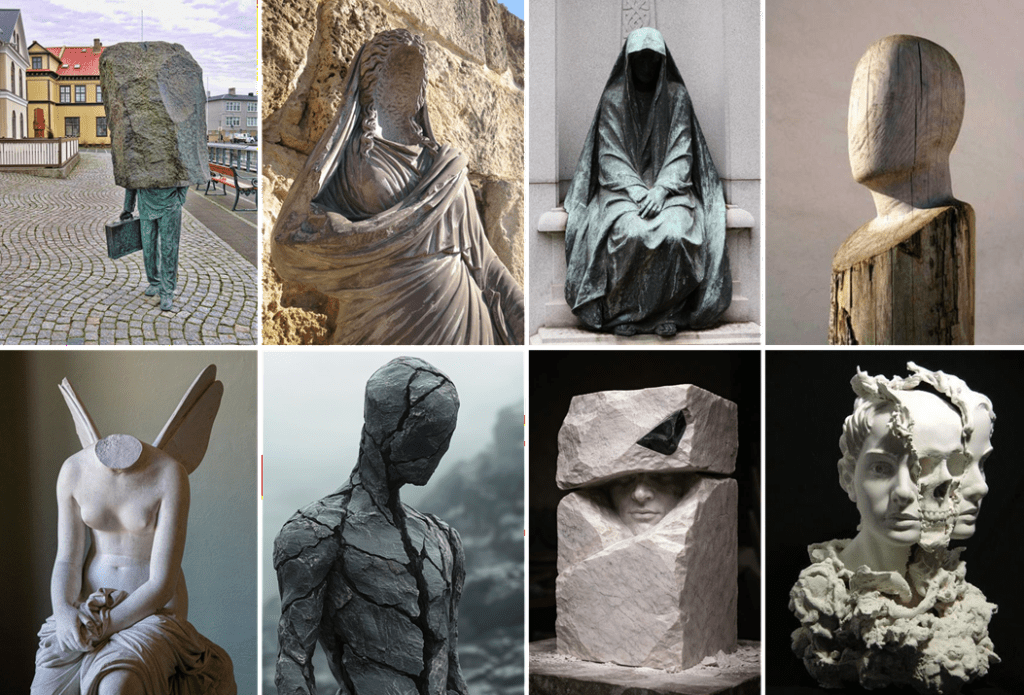
[Image sources (in roughly reverse order (oops- sorry!)): ツ ; “Secretive.“; Concept art characters ; Pseudo Sommeliers; motorsavsfigur ; Nowhen; Art ; Iceland: A Great 2 Day Itinerary]
*
They all feel quite eerie, and it made me realize the importance faces play in making people people. There’s also something in this art that reminds me of my paingry post (here), as well as my post about feeling a little like Dr Jekyll and Mr Hyde (here) where you can be two people at once when you live with chronic pain… and about my migraine life lived in the ecotone…
It also made clear to me that beneath our ‘differences’, our skin and our facial features… we’re all human… all the same… all worthy of adoration, no one better than anyone else…
So, stand tall and raise a triumphal arch in your own head and heart: YOU ARE AMAZING!
But…
(potentially contentious opinion coming up)
…maybe use the polished stones to build less arches and more hospitals, and schools…
Sending love, light and laughter your way.
You are wonderful and you deserve to be happy and healthy.
Take care taking care of yourself,
Linda x


 The Mindful Migraine
Leave a reply to greenwellcenter Cancel reply