
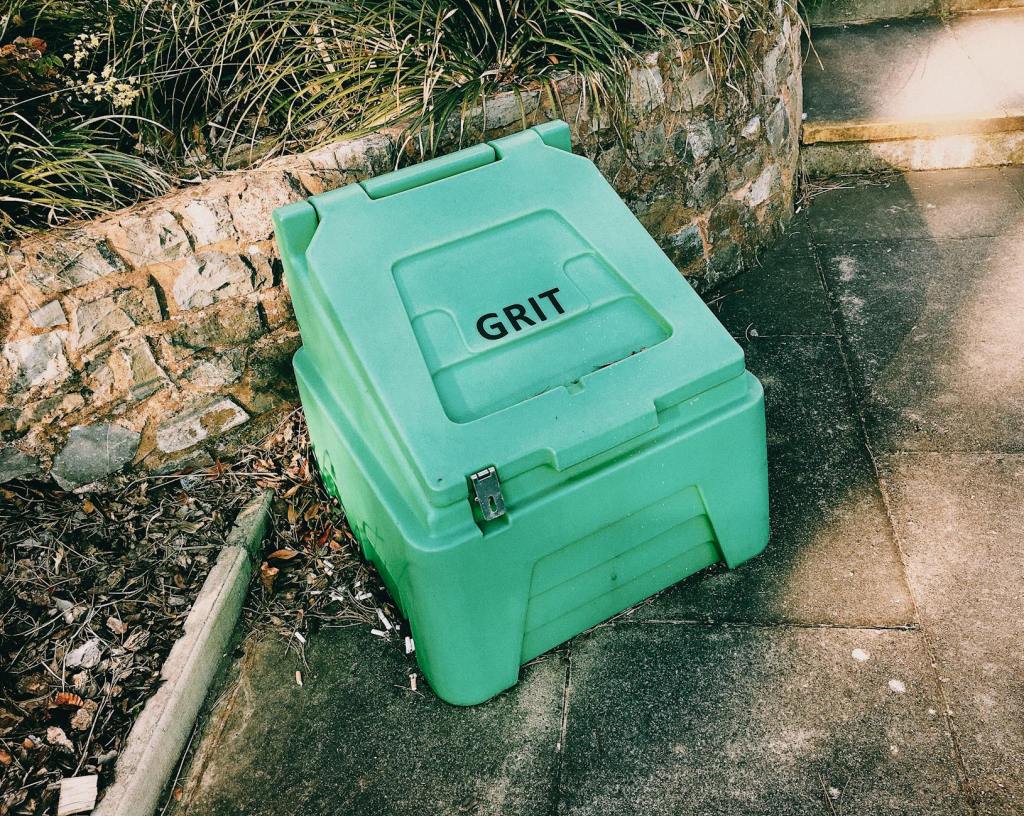
I recently came across an online quiz (of 10 questions) that determines how much “grit” you have. According to my attempt, (I got 4.4 out of 5), it means I’ve got more grit than 90% of Americans. Yay me.
Do I though? Or am I just stubborn? Or is grit and stubbornness the same thing?
One of the questions asks something along the line of whether you have overcome tremendous obstacles to achieve an outcome – that’s a big YES from me – completing my PhD to become Dr Linda took 5 years, 3 of which I had chronic migraine. I’m sure that alone pushes me ahead of a lot of others who would have given up.
Again though – was my perseverance about grit and determination or stubbornness? Silliness even? I could have delayed the study and prioritized healing, but I chose to push through the pain to complete the task at hand… is that grit or gristle?
The scale comes from Angela Duckworth’s website (she has a PhD in psychology) where she explains her research this way: it “focuses on two traits that predict achievement: grit and self-control. Grit is the tendency to sustain interest in and effort toward very long-term goals […] self-control is the voluntary regulation of impulses in the presence of momentarily gratifying temptations…”
Getting sh!t done in terms of my PhD meant focusing on a very specific long-term goal and controlling my impulse to get distracted by other things (or sleep) day by day, along the way.
In her book “Grit: The Power of Passion and Perseverance” (2016) (see more on her site here), Ms Duckworth states that for “anyone striving to succeed — be it parents, students, educators, athletes, or business people — […] the secret to outstanding achievement is not talent but a special blend of passion and persistence she calls ‘grit’.“
Here she is explaining it in a (5min) TED talk:
[Video source: Grit: The Power of Passion and Perseverance | Angela Lee Duckworth | TED]
*
To throw a curve-ball at you all, when I think of ‘grit’ I think of ‘carborundum’ which was a sandy-dirty mixture of silicon and carbon that we used to sprinkle into the paint used for line-marking carparks when I was working as a Project Manager. The idea is that a painted pedestrian crossing gets slippery in the rain, so you make the yellow or white painted stripes gritty, so that there is more friction / resistance, and people are less likely to go for a skid if they are rushing across the carpark to get out of the rain, and therefore, they are hopefully less likely to get hurt or slide under a vehicle… and… less likely to sue your business into oblivion if they do fall over and get hurt.
[I think in snowy locations, grit is also used to stop roads from icing over? But I might be wrong… it’s never snowed in Sydney Australia… like… ever… except perhaps one single day in 1836… according to our national newspaper here.]
So, yeah, in a way, there is a stubborn, get down and dirty, come what may, sense to the word ‘grit’ that sorts of makes sense to me.
My mates over on Wikipedia note that “Traditional constructs in this area [of grit] include perseverance, hardiness, resilience, ambition, self-control, and need for achievement. Grit has been argued to be distinguishable from each of these in the following ways…”
In other words, it’s similar but different to a variety of personality traits.
Everywhere I went looking online for the value of grit, I found summaries of Ducksworth’s book.
Interestingly, Wikipedia also noted that there has been a fair bit of pushback on “grit-narrative” which included problems such as: it risked victimizing people whose obstacles were not easily surmountable; it didn’t properly reflect different cultural (and social / racial / gender) situations; it risked turning people off trying, because if they didn’t stick with it they might be judged as un-grittily-unmotivated as well as weak and unsuccessful when in reality, motivation is situation-dependent; the notion that your grit-rating can be enhanced was also questionable; and other research suggested that measures of “conscientiousness” were often equally valid in predicting future success.
If you’re interested in trying to boost your grit, then the artcile over on BetterUp (What is Grit? 5 Ways to Develop it Without Burning Out) has a summary of 5 steps, including: Find your passion / Practice / Contribute to a greater purpose / Give yourself time / Immerse yourself in a gritty culture.
It also provides a warning: getting gritty can lead to obsessive behaviors.
As the article notes: “Grit is what pushes great performers to reach the edge of their ability. It’s what helps them show up and persevere despite incredible odds. […] To suggest that your passion should become your obsession is to push someone off a cliff. // So what separates one gritty person from another gritty person? // The answer lies in flow. While grit brings us to our edge, it’s flow that continually pushes the edge out, and keeps sustainable performers from falling off into the abyss.”
Getting gritty is a tightrope walk – which makes sense to me – it’s returning back to my earlier comment about whether my determination was sensible or silly. Applause for me that I kept going against chronic pain odds, but ALSO, eyebrow raise to me that I let myself fall into a pain-abyss and missed the opportunity to step back a bit.
Ultimately, the gritty-tightrope walk will be highly personal and situational… what works for one person one time may not be suitable all the time, or for someone else…
Anyway – grit aside, Ms Duckworth also set up (the now defunct) Character Lab which helped kids be the best version of themselves. The website still has some GREAT “Playbooks” that give you tips and tricks (whether you’re young or old). Of the 14 playbooks, here’s the links to the 3 playbooks that might help you with your long-term goal of healing your chronic pain:
+ Grit: “…no matter how gifted you are—no matter how easily you climb up the learning curve—you still need to do that climbing. There are no shortcuts.” (Includes more tips to try, such as “Step by step” where you “think of goals as part of the journey, not the destination”.)
+ Gratitude: “When you feel gratitude, you feel a sense of abundance. […] Grateful people are happier and more fulfilled.” (Includes links to more information such as “Vitamin G“.)
+ Proactivity: “Proactive people don’t accept the world as it is or wait for direction from others to initiate change. Instead, they take matters into their own hands, acting to make the world better for themselves and others.” (Includes links such as “Wiring for resilience” which explores “How do people decide they can overcome adversity?”)
Anyway – I think I DO have grit – but I doubt that puts me in the top 10% of the population of America – because I know just how #blessed my life really is, and because there are just so many of us living with chronic pain and having to get sh!t done.
Regardless, if you don’t want to skid out in the rain, get stuck in the snow, or fall into an abyss, then a little bit of grit is good for all of us.
Take care taking care, Linda x
*
PS- If you’re interested in taking the test yourself (instant results and no sign-up required), it is on Angela Duckworth’s website here: Angela Duckworth – let me know in the comments below if you agree with your score.


 The Mindful Migraine
Leave a reply to The Mindful Migraine Blog Cancel reply