
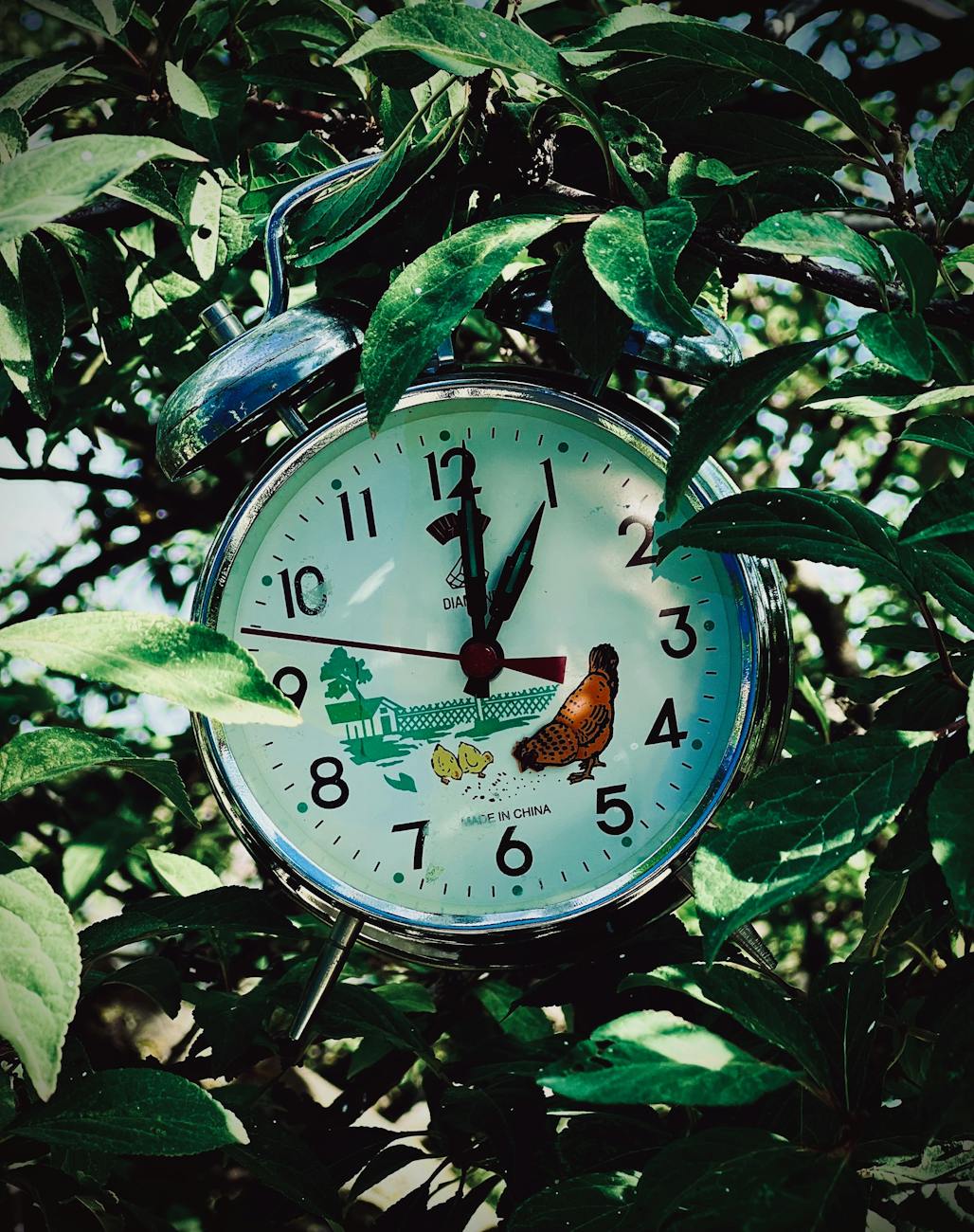
Short post today, because time is tight. Seriously – where has this year gone?!? It feels like only yesterday I was having my New Year’s Revelation that we can be more than one version of ourselves… and now… 4 months have swept by in the blink of an eye…
When I was younger, people used to say, “time goes faster when you’re older”. It felt like such a silly thing to say. Time is time. We all get the same 24 hours in a day. Now, however, I’m “older” and I can confirm that time really does seem to speed up!
Curious to know whether I’m just jumping on someone else’s bamboozling-bandwagon, I did some research, and it turns out science is on my side… sort of.
First up, a research paper from 10 years ago from the International Journal of Environmental Research and Public Health (here) concluded: “We found several meaningful connections between the time perspective as trait and the awareness of time.” In this instance, though, it was not strictly age that was a determining factor. Aspects which also contributed to your sense of time included if you were under time-pressure, how much you ruminate, how easily you get bored, your routines, your ability to regulate your emotions, and how future-focused you are.
More recently, another article (here) found that people felt that Christmas or Ramadan was coming around faster each year. The reasons they proposed included enthusiastic anticipation, greater attention to time, and ‘memory errors’. For Christmas in the UK, sped-up time might also relate to a lower social quality of life and, and in the case of Ramadan in Iraq, with females of a younger age.
OK, so neither of those papers are supporting my cause.
But over on the University of Michigan website (here), they have an article which poetically speaks to ageing, noting of our youth: “…the summer holidays felt elastic, a never-ending wad of chewing gum that kept on extending as hours melted away on lazy afternoons…” The author, Helen Coffey, then goes on to review a book called “Time and Beauty: Why time flies and beauty never dies” (2022) by mechanical engineering professor Adrian Bejan.
The book explores the scientific and evolutionary basis for our perceptions of time (and beauty). Coffey writes that Bejan theorizes, “the rate at which we process visual information slows down as we age; as the size and complexity of the networks of neurons in our brains increase, the electrical signals must travel greater distances, leading to slower signal processing. The result? We perceive fewer ‘frames-per-second’ as we get older, and therefore time feels like it’s passing quicker. It’s like a flipbook – the fewer the number of pictures, the quicker you flick to the end.”
Psychology Today summarizes the paradoxical experience of time this way: “When we are teenagers, we are so open and receptive to the world that it feels constantly new and fresh. […] We experience big emotions, teaching us about relationships, responsibility, and everything else. It feels like so much happens every day because our brains are taking in so many things. […] As we get older, our brains aren’t wired to take in as many things from the outside world, or to learn in the same way. Therefore, three years ago can feel like yesterday: not much has changed in our brain, our perception, or our lived experience.”
One last insight worth mentioning is how to reverse those time-flies.
In the online article at Independent.co.uk – The scientific reason years get faster as we get older – and how to slow them down – they write there are a few ways you can make time count:
+ break old routines / shift things up a little,
+ dabble in a new hobby or listen to a different kind of music,
+ treat yourself to surprises,
+ forget about the past and don’t dwell on the future,
and
+ mindfulness – although they refer to it as “that dreaded word” they acknowledge that living in the moment is key to slowing time down.
One last, last-point worth mentioning. In the comments under the Independent article, a 77-year-old noted that he thinks time-perception is more complicated than the article suggests, but also offers a simple reason why time might fly as you age: “The shorter years are perhaps an illusion because each year is a smaller fraction of a lifetime.” In other words, if you’re 10 years old, then 1 year represents 10% of your whole life. Live to 100 and that same 1-year-span now only represents 1%.
So much to think about!
If only I had the time!
Have a great weekend peeps, and may time go slowly for you.
Linda x
PS – if you visit here often, then you know that I often check out reviews of books on Goodreads out of curiosity. Bejan’s books has several star ratings, but only two written reviews. The first gives it 5 stars and talks at length about Bejan’s professional successes… whilst the second review gives the book 1 star and notes “I really don’t get it [with a crying emoji]”. Gotta love how diverse we all are!
PPS – the you-rock rock is finally gone who knows where – wishing you well little rock… rock on…!


Leave a Reply