
There’s something very mood-affirming about finding out that the way you live, or the strange habits you have acquired over time, are suddenly considered ‘mainstream’ or ‘on trend’.
The first time I felt weirdly vindicated was during the Australian Covid lockdown when everyone had to stay home all day, every day. Like… hellloooo… welcome to my life!
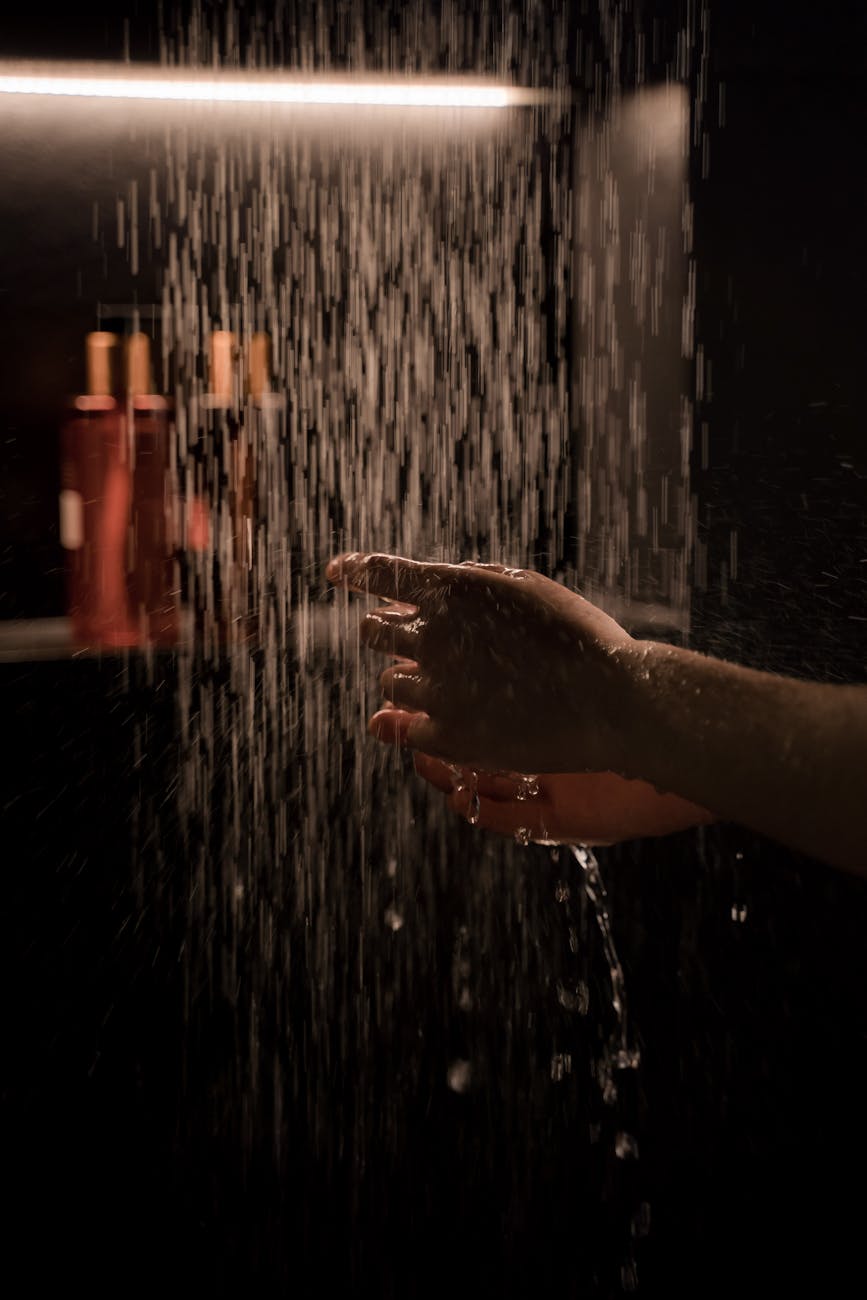
More recently, it was when I discovered that the way I have my evening showers was suddenly a popular talking point that has been exotically named “dark showering”.
In simple terms, dark showering means taking a shower in the dark.
For me, it involves keeping the main ceiling lights off, but putting a small side lamp on (if at all) and then enjoying a warm shower without the sensory intrusion of harsh overhead lights.
It feels a bit like a Float Tank but you stand up and don’t have to pay extra for the privilege of having your senses deprived.
I’ve been doing this for a long time, out of necessity, to ease migraine pain – the low level lighting and warm water help A LOT (read more here about the advantages of washing your hair for migraine relief).
[Disclaimer – remember this is not a medical website, so be cautious about what practices you adopt after reading. Take care also if you suffer from vertigo with your migraine or feel any inclination towards dizziness at any time; you should be careful not to make the room too dark in case it makes your balance worse or harder to see what to hold onto.]
Imagine my surprise when I discovered that my preference for showering in the dark is “a thing”: Dark Showering Is the Calming Nighttime Habit Psychologists Recommend for Better Sleep
As the Real Simple article notes: “Taking a shower is already one of the humblest but most fulfilling self-care acts. The warm water cascading down your back, the scent of your favorite shampoo or body wash doing its work, the way your mind settles. […] In recent months, the ‘dark showering’ trend has surged across social media as more people give it a go and realize it’s actually kind of powerful.”
Bottom line advice: let your morning shower be energizing, but the (sneaky extra) one in the evening be calmer: “By dimming or turning off the lights, you create a sensory cocoon that signals the body to unwind.” As the article explains, your nervous system gets to down-regulate, and your circadian rhythms get a reminder that it’s time to rest.
‘Sensory cocoon’ is the perfect way to describe it, and again, it’s why I thought of a float tank; a small space where your body benefits from a watery embrace while your mind gets to take a break.
The article says there are 5 benefits to dark showering: reduce stress, improve sleep, reset your mood, enhance mindfulness (yay team!), and… ahem… it fosters romance…
OK, that’s not where my healing post was intending to go, but hey… love is lovely.
According to the article, India and Japan both have a long history of evening baths in the dark, as did the ancient Greeks and Romans.
I can’t speak to the ancient history of the idea, but I can tell you that in today’s hectic world, a slow shower in the dark, is just the ticket to a restful night’s sleep… especially if you have lingering migraine pain.
Enjoy… or get well… whatever is more suitable in this moment.
Take care taking care,
Linda x
*
PS – for those of you who observe, all the best for Easter.


 The Mindful Migraine
Leave a reply to joyindestructible Cancel reply