
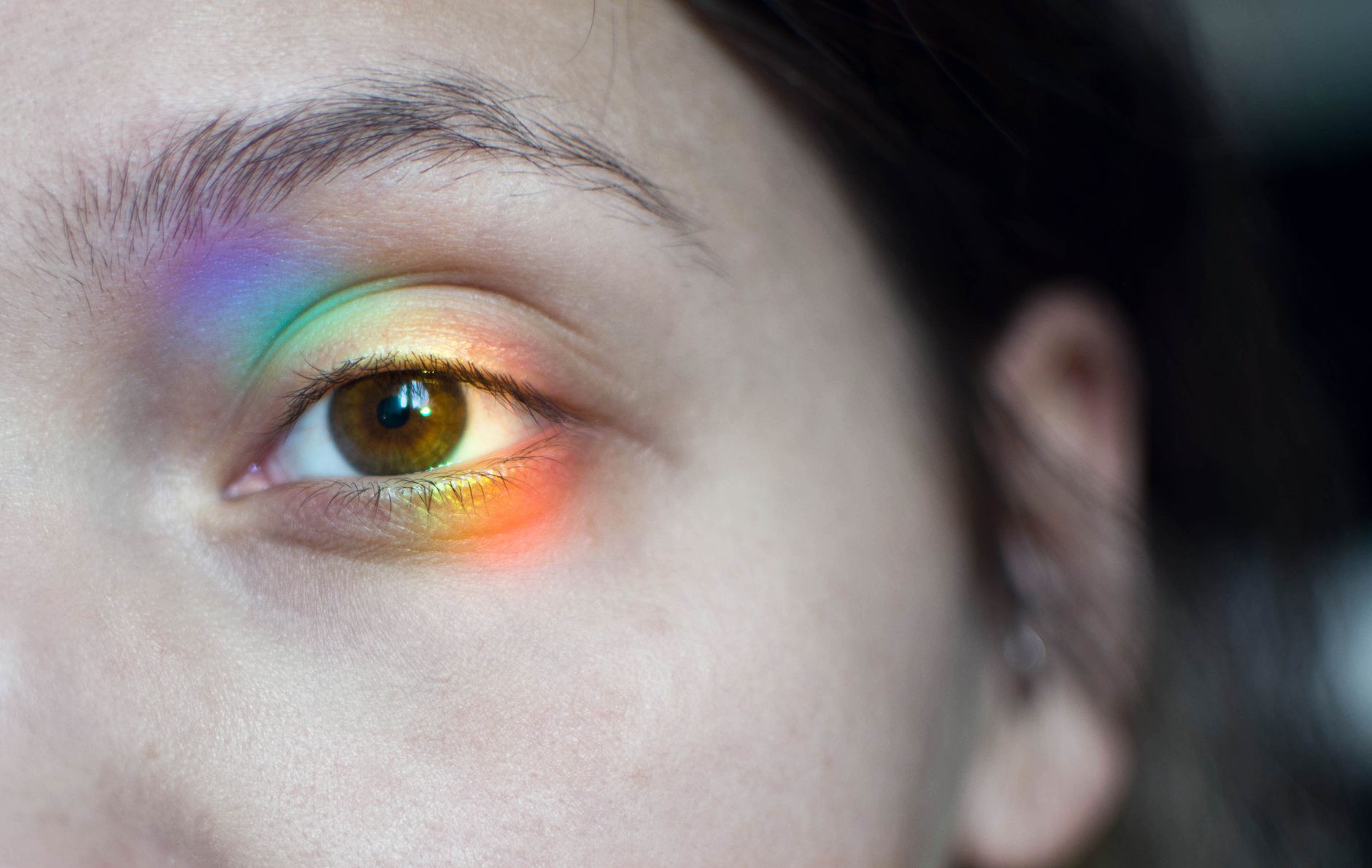
Today’s post is about Ocular Migraine. Which is also sometimes called Retinal Migraine. (And that’s just the start of my confusion!) I don’t personally have this sort of migraine, so this is all new to me. I’ll go step by step through the material I read, and hopefully I’ll help both of us understand the condition by the time we get to the end of this post.
[If you want to be super-certain of getting the most accurate information, ASAP, I recommend you scroll to the very bottom of the post where I have included the links to all the sites I read and summarized.]
Disclaimer – remember – this is not a medical site – please speak to a healthcare professional for accurate advice that suits your specific situation.
How many types of migraine are there?
When you live with migraine, you assume migraine is migraine is migraine. BUT, the reality is there are many sub-sets of the diagnosis.
The first distinction is whether or not you experience ‘aura’ with your migraine. As such, the top tier classifications of migraine are:
- Migraine WITHOUT aura (COMMON migraine) – this is the most common type of migraine and affects roughly 3 out of 4 migraine patients. It usually involves throbbing pain on one side of your head, lasts 4 to 72 hours, and may be accompanied by nausea and sensitivity to light or sound.
- Migraine WITH aura (CLASSIC migraine) – about 1 in 4 people with migraines experience an aura. An aura is a set of neurological symptoms that can include visual disturbances, sensory changes, speech difficulties, or motor weakness. Aura usually lasts 10 to 30 minutes and occurs just before or during the head-pain phase.
From there, several subtleties blossom. They generally relate to what symptoms you have, and patients can experience more than one type of migraine (listed alphabetically):
+ Abdominal migraine: mostly occurs in children and is characterized by stomach pain rather than head pain.
+ Basilar migraine – also known as ‘vestibular migraine’ – but is now called ‘migraine with brainstem aura’. Symptoms include vertigo and speech problems.
+ Chronic migraine – defined as having 15 or more headache days per month for at least three months, with at least eight of those days being migraine attacks.
+ Hemiplegic migraine – (I did a whole post about it here) – involves temporary paralysis down one side of your body, as well as potential speech problems.
+ Menstrual migraine – is linked to hormonal changes during menstruation, and therefore, often occurs with predictable timing.
+ Ocular migraine – also known as retinal migraine – see notes below.
+ Retinal migraine – also known as ocular migraine – see notes below.
+ Silent migraine – is when you have aura symptoms but no head pain.
+ Status migrainosus: is a severe migraine attack that lasts for more than 72 hours and requires medical intervention.
+ Vestibular migraine – may or may not include head pain, but has symptoms such as vertigo and dizziness.
FYI – my migraines have changed over time. Years ago, I had occasional Hemiplegic Migraines, then more regular Menstrual Migraines, and in the last few years, slipped into Chronic Migraine. A couple of times I’ve also experienced Status Migrainosus, and ended up in hospital (read more here) or didn’t get there, but somehow managed to break 3 teeth grinding through the pain (ugh – read more here).
OK, now that the background has been covered, let’s get to the reason you came here:
What is ocular migraine?
An ocular migraine is a migraine that causes temporary visual disturbances. These can include blind spots, zigzag lines, flickering spots or shimmering stars. They usually occur in one eye and last about 5–60 minutes before vision returns to normal.
These episodes may occur with or without head pain.
The version of visual disturbance I come across most in my research is the rainbow-zig-zag variety. On an internet page about how being a premature baby might increase your chances of migraine (more on that another day, perhaps), they included an image of normal vision versus migraine aura:

[Image source: Preterm birth may predict the risk of migraine, Finds study]
*
Over a year ago, I wrote a post about Studio Migraine (here), which included an app they had on Instagram that revealed what it was like to look through the visual disturbance of a migraine. Instagram has lots of similar posts that give you an insight (pun intended): #ocularmigraine • Instagram
Here’s a screen shot of some of the images from Instagram to give you an idea of how wide-ranging the visual disturbances can be:

Ocular migraines can be experienced as early as 7 years of age but tend to be more likely in your 20s. It’s more common for women than men, and for people under the age of 40. Apparently, the frequency of these visual disturbances differs from person to person, and in very rare cases, the visual problems can become a more permanent problem.
If you are having any version of visual disturbance – see a doctor.
Explain your symptoms clearly, and let them help you decide whether to go to an ophthalmologist to double check there is nothing wrong with your eye. They might also send you to a neurologist or headache specialist so they can help devise a migraine management plan. This plan might include identifying your triggers, reducing your exposure to them, and potentially taking medication (preventative or acute (during an event)).
What causes migraines?
This question has a “how long is a piece of string?” answer. Every migraine person is different, which means their triggers are also different. Regularly cited examples of what triggers a migraine include: stress, hormones, dehydration, genetics and changes in the weather.
But there are potentially also more subtle ones I’ve written about before. Some triggers are very specific to individuals, such as nightmares, drafts and visiting the doctors. Even the idea of avoiding triggers can be triggering… sigh.
If you want more information, pop over to my previous post: What Really Causes Migraines? or click on the tab that reads “Triggers” for all my posts related to them.
What causes ocular migraines?
If you’ve been here a while, or know much about migraine research, then you can probably guess how I’m going to answer this question…
Researchers don’t know exactly what causes ocular migraines.
Ocular migraines are potentially triggered by the same triggers as other migraines, noted above.
In terms of what causes the visual disturbances, one theory is changes to the blood flow in your retina. It could also be a decrease in blood flow to optic nerves, or a spasm in the blood vessels. Pressure on the neurons in your retina is also possible. Brain electricity that potentially causes migraines in general might also play a role. Genetic inheritance may also be at work.
[Disclaimer – again – this is not a medical site – please speak to a doctor for scientific information.]
In conclusion…
- Ocular / retinal migraine is one of several versions of migraine.
- Diagnosis will come when you describe your symptoms to a doctor or are referred to an ophthalmologist / neurologist / headache specialist.
- The causes of ocular migraine are the same as migraine triggers in general.
- Managing ocular migraine relies on general migraine-preventative strategies.
Sorry that I can’t offer you a magic wand waving: voila!
Today’s post was tricky. Whilst I have A LOT of experience living with migraine, ocular migraine is NOT something I can personally describe.
IF YOU HAVE OCULAR / RETINAL MIGRAINES – do me a favor (and anyone else who might be visiting this blog) and drop a comment below to provide some extra first-hand information.
Until next time we meet, take care taking care people and may your pain be as little as possible,
Linda x
*
PS – If you’re interested in knowing more, these are the websites I visited:
8 Types of Migraines and How to Treat Them – GoodRx
Types of migraine – The Migraine Trust
Types and Subtypes of Migraine
Ocular Migraine: What It Is, Causes, Symptoms & Treatment
OcularMigraines: Causes, Symptoms, Diagnosis, Treatment


Leave a Reply